
Lehman Caves will see New Light
Lehman Caves and the Lehman Caves Visitor Center have closed this winter for a six-month $5.8 million project to update and replace the cave’s failing lighting system. Originally installed in 1977, the current system has long been in need of repairs, but replacement parts are no longer available for the 48-year-old electric lights. Funded by revenue from the Southern Nevada Public Land Management Act (SNPLMA), this project is replacing the aging system with new illumination so that visitors can continue to enjoy Lehman Caves for decades to come.
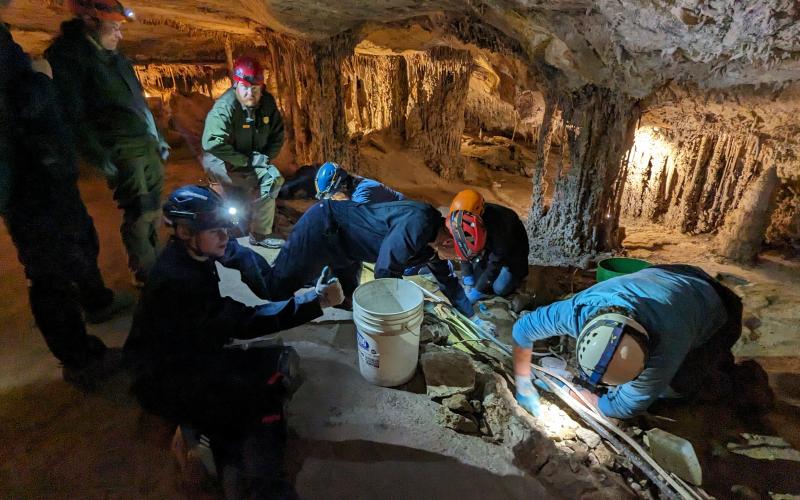
Since October, a team has been hard at work behind the scenes preparing the caves for the installation. Twenty-four volunteers, fifteen park staff members, and one Great Basin National Park Foundation employee, collectively contributed more than 1,100 volunteer hours and over 2,100 total hours to this effort so far. Even during the government shutdown this careful work continued as the team removed the outdated wiring and grout while protecting the delicate formations.
The team’s accomplishments in this demolition phase include: the removal of four miles of wire (ten cubic yards’ worth) along with 230 old lighting fixtures, four sets of electrical panels and transformers, and more than 15,000 pounds of grout. Some of the wiring dates back to 1941 when the cave’s very first lighting system was installed.
Installation of the new lighting system and technology will begin in January and finish by Memorial Day weekend. This expansive and much-needed update will restore access and experiences that have been lost or limited in recent years due to the inadequate lighting. For example, the tour that connects the Entrance Tunnel to the Lodge Room could not be offered for the last year and a half.
Caves are extremely fragile ecosystems, and human exploration invariably causes damage. Over the years, scientists have found that the older lights in Lehman Caves have generated excessive heat and humidity, which has disrupted the cave's natural climate. The additional heat and humidity have increased algae growth, which have harmed cave formations.
We are especially excited that the new lighting system will not only replace a system that was actively failing, but will drastically cut both the heat and humidity fluctuations associated with the old system. It’s an exciting time for the cave, and its restoration, to see new light.
Photo: National Park Service