Register to join us for this special virtual program on August 12, 2026 at 6:00 PM Pacific Time
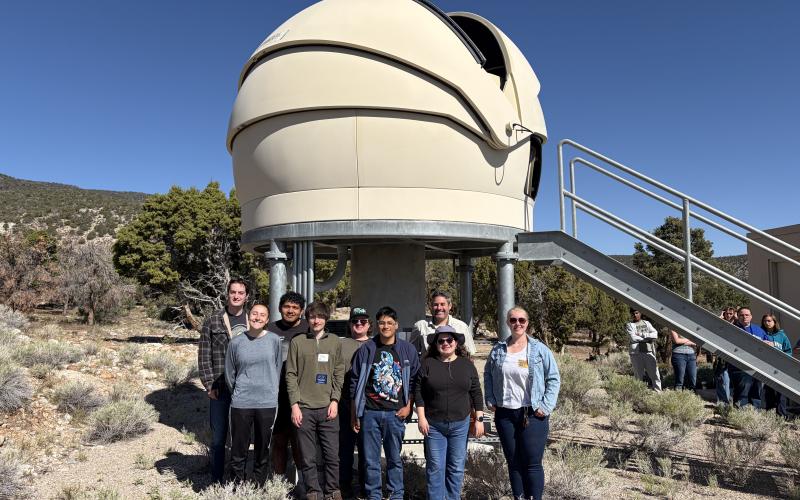
Ten years ago, the Great Basin Observatory captured its first light. In this program, hear from students who have used the GBO for research, along with our GBO collaborative partner professors from the University of Nevada, Reno and Southern Utah University. Together, they’ll highlight how the GBO supports astronomy research, student learning, and dark sky preservation in the Great Basin.
REGISTER
Meet our panelists:

Dr. Cameron Pace
After building his first telescope in high school, Cameron Pace continued to pursue his astronomical studies throughout his college career earning a bachelor’s, master’s and doctorate degree in astronomy. Now an assistant professor of physics at Southern Utah University, Pace is able to share his knowledge and expertise of astronomy with his students in the classroom and at the Ashcroft Observatory. At SUU, Pace teaches both astronomy and physics courses.
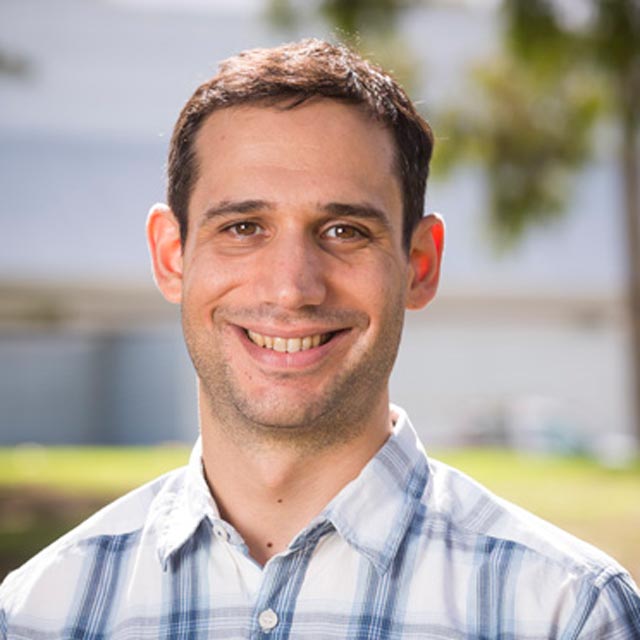
Dr. Richard Plotkin
Richard Plotkin’s research uses multiwavelength space- and ground-based observations to study a wide variety of phenomena related to accreting black holes, over the full range of black hole masses and accretion rates. Main research goals include better understanding the structure/geometry of accretion flows and outflows in different accretion regimes, in order to more effectively use radiation as a probe of Galactic and extragalactic black hole populations, and to learn how black holes may impact their large-scale environments.
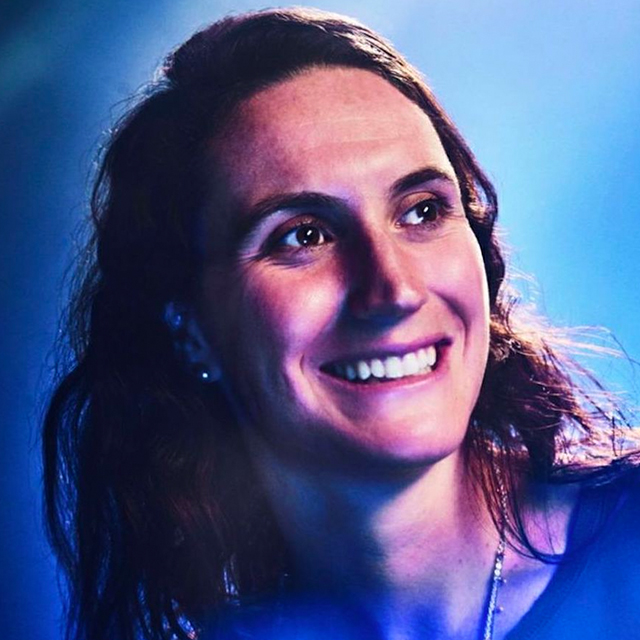
Dr. Kelly Kosmo O’Neil
Kelly Kosmo O'Neil is a teaching professor in the Physics Department at the University of Nevada, Reno (UNR), where she has been teaching astronomy and astrophysics since Fall 2023. She earned her PhD in Astronomy and Astrophysics at UCLA in 2023, studying the orbits of stars around the supermassive black hole at the center of our Milky Way Galaxy, before joining the faculty at UNR. She is passionate about education and enjoys watching her students grow and learn, especially through hands-on experiences using the Great Basin Observatory.